Postponing motherhood to later ages has become a common phenomenon in more developed countries. More and more couples are delaying their dream of having a baby due to social, educational, and economic factors that are already shaping a new paradigm in the concept of family.
However, human biology does not always support such delay, since female age is the main cause of complications when trying to conceive naturally, especially in women aged 40 or older.
Fortunately, thanks to assisted reproduction treatments such as egg donation, the dream of becoming a mother remains possible despite advanced —in reproductive terms— age. Today, on this World Fertility Day, we will see how thousands of women have managed to start a family even when age appeared to be the main antagonist.
How fertility changes after the age of 40
Age, as confirmed by numerous studies, is recognized as the main determining factor in the decline of female fertility —recent studies also confirm this for male fertility—. From the age of 38, there is a drastic decrease in the ovarian reserve as well as in the quality of the eggs. In addition, the occurrence of diseases in the reproductive organs (for example, endometriosis), miscarriage rates, and chromosomal abnormalities increase.
According to official data and statistics…
- The infertility rate in women aged 40 or older is nearly 30%. In other words, 3 out of 10 women suffer from infertility once they turn 40.
- It is estimated that 15% of pregnancies end in miscarriage during reproductive age, with the likelihood increasing significantly with each passing year.
- The possibility of becoming pregnant naturally after the age of 40 is 50% lower than in younger women (maternal age).
- The probability of embryos being abnormal is 67%, double that of younger women (33%). In addition, 80% of the oocytes of a 40-year-old woman already present aneuploidy.
These proven data confirm that maternal age directly influences the likelihood of achieving a pregnancy and the birth of a healthy baby. However, as mentioned in the introduction, there are assisted reproduction treatments capable of overcoming all biological barriers to fulfill the dream of starting a family.
Egg donation: the most successful treatment
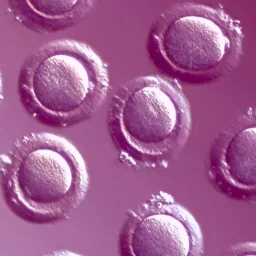
Egg donation is the most successful treatment for women of advanced age. It involves achieving pregnancy using donor eggs due to the inability to do so with the patient’s own eggs.
This laboratory process, similar to In Vitro Fertilization (IVF), results in an embryo that is later transferred to the uterus of the future mother, leading to the desired pregnancy.
These eggs come from young and healthy donors aged between 18 and 32 years old, so the chances of success are very high.
Advantages of egg donation at age 40 or older
The main advantages of egg donation from the age of 40 years old are:
-High success rates accompanied by shorter time to achieve pregnancy
-Guaranteed embryonic and genetic quality thanks to donor contribution
-Phenotypic selection and genetic compatibility with the donor
-Psychological support from professionals
-Less medication and fewer punctures for the patient
-Reduced risk of multiple pregnancy
-Reduced waiting times thanks to working with a large gamete bank (OvobankID)
A decision as personal as it is safe
Accepting egg donation as the ideal treatment to achieve pregnancy is not always easy. The emotional burden and the decision to opt for donor eggs sometimes hinder the determination to conceive and start a family.
However, motherhood is not defined by genetic transmission, but rather by love and the desire to be a mother. For this reason, we understand egg donation as the opportunity to fulfill the greatest dream life can offer.
From OvobankID we invite all women to learn more about the egg donation treatment by consulting with our assisted reproduction specialists.