The path to motherhood doesn’t always blossom at an early age. While many first reflect on becoming a mother or father during adolescence, putting it into practice and making it a reality can take much longer.
Today, it is increasingly common to see women who wish to become mothers around the age of 40. However, from the age of 30 -especially after 35- the ovarian reserve and egg quality begin to decline significantly.
This reduction in both quantity and quality can lead to difficulties conceiving, often requiring assisted reproduction treatments and, in some cases, donor eggs through procedures such as egg donation. This is where one of the most important and groundbreaking techniques in reproductive health comes into play: vitrification.
What is vitrification and what does it offer patients?
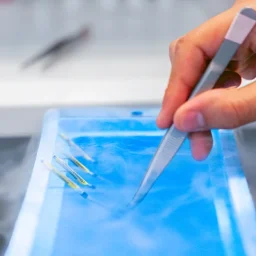
Vitrification is an advanced cryopreservation technique that makes it possible to freeze eggs or embryos for future use, ensuring fertility preservation. The method relies on ultra-rapid freezing in liquid nitrogen at extremely low temperatures, combined with cryoprotectants. The goal is to prevent the formation of ice crystals that could damage the viability and survival of gametes or embryos.
How does the egg vitrification process work?
For the procedure to be successful and to achieve high survival rates, both vitrification and warming must be carried out by experienced specialists. In fact, it is during the warming process—when eggs are thawed—that precision and skill are most crucial, as shown by a scientific study conducted by Ovolearning.
The procedure involves several steps:
-
Ovarian stimulation: Hormonal medication is administered to stimulate the ovaries so they produce a sufficient number of eggs.
-
Egg retrieval: Through follicular puncture, a simple and painless procedure, mature eggs are collected.
-
Vitrification: The retrieved eggs undergo ultra-rapid freezing in liquid nitrogen (-196 °C), using cryoprotectants to maximize survival rates.
-
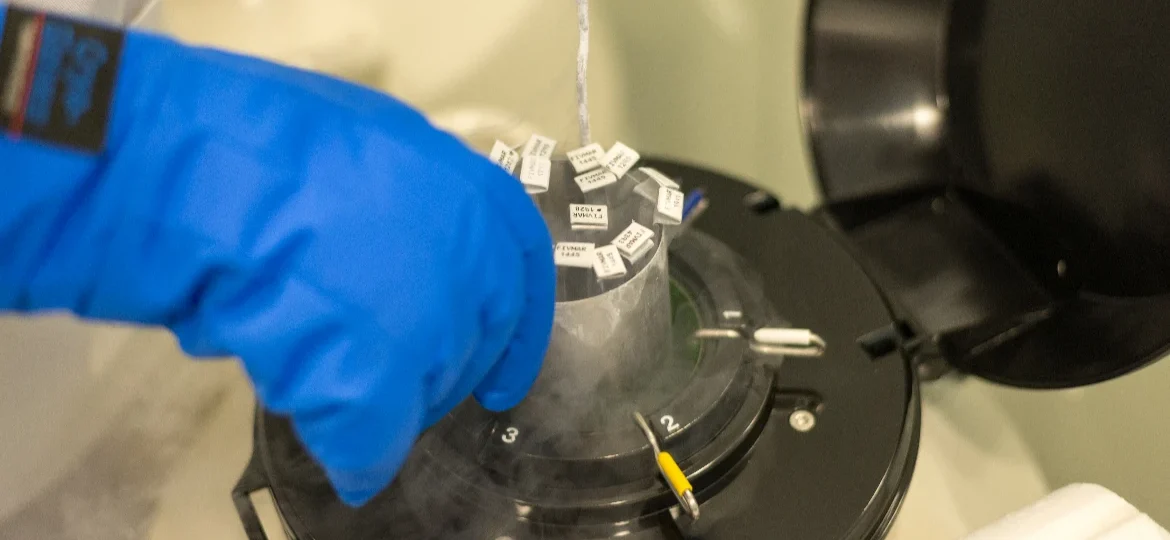
Storage: Finally, the eggs are preserved in special liquid nitrogen tanks (DRY SHIPPERS). When the woman decides to use them, they are warmed (also known as thawing) so they can be fertilized and make pregnancy possible.
The benefits of vitrification
Thanks to this indefinite storage method, women can plan their motherhood journey calmly, on their own terms and timeline.
At OvobankID, this is possible, since it holds the largest egg donor pool in Europe, with a total of three egg banks worldwide.
Learn more about the laws in your country, OvobankID’s donor pool, vitrification, and worldwide shipping on our website.